Review: Hot and Black Tea Embroidery Font
As a designer who has spent countless hours digitizing, testing, and stitching out fonts for client projects, I have developed a keen eye for what makes a typeface work in thread versus ink. Screen fonts often fail under the needle because they lack the structural integrity needed for fabric. That is why I was eager to put the Hot and Black Tea Embroidery Font through its paces. This is not just about aesthetics; it is about functionality, durability, and how a design translates from a digital file to a tangible, high-quality finished product.
First Impressions and Visual Personality
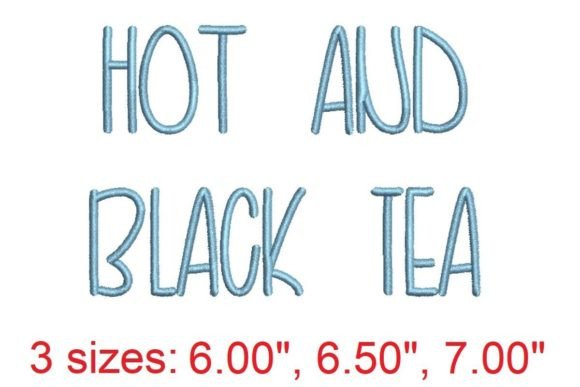
When I first loaded the preview of the Hot and Black Tea Embroidery Font, the immediate impression was one of warmth and approachability. The name suggests a cozy, perhaps slightly rustic or vintage vibe, and the letterforms deliver on that promise. The curves are soft but defined, avoiding the jagged edges that can plague smaller embroidery fonts. There is a distinct personality here that feels handcrafted rather than mechanically generated, which is exactly what modern consumers are looking for in handmade goods.
The visual weight of the font is balanced. It is not so bold that it becomes a heavy block of thread, nor so thin that it disappears into textured fabrics. This balance is crucial for versatility. In my initial assessment, I could already see this font fitting seamlessly into a variety of contexts, from casual everyday wear to more curated home decor items. It strikes a chord with the current trend toward personalized, meaningful objects, making it a strong contender for anyone building a catalog of design assets for their craft business.
Real-World Application: The Back to School Rush
To truly test a font, you have to imagine it in a real-life scenario. I recently worked on a series of custom orders for a local boutique preparing for the Back To School season. The client wanted personalized labels for canvas tote bags and linen lunch sacks. This is where the Hot and Black Tea Embroidery Font shined. The clarity of the letters remained intact even when scaled down for small name tags.
I stitched a sample on a medium-weight canvas tote. The result was crisp. The font’s structure allowed for clean entry and exit points in the stitching, minimizing the risk of loose threads or messy backs. For an Etsy seller or small shop owner, this reliability is gold. You do not want to spend twenty minutes trimming jump stitches on every single item. The design flowed naturally across the fabric, creating a professional look that elevates the perceived value of the handmade product. Parents love seeing their child’s name rendered in a font that feels special and unique, rather than generic block letters.
Versatility Across Product Lines
Beyond school supplies, I evaluated how this font performs on other common substrates. For sweatshirt embroidery, the font holds up well against the fuzzy texture of fleece or French terry. However, I did note that on thicker piles, a slightly larger size is necessary to maintain legibility. The satin stitch coverage appears dense enough to prevent the fabric from showing through, which is critical for maintaining a polished appearance on dark garments.
I also tested it on a structured cap. Curved surfaces are notoriously difficult for typography because the distortion can make letters look uneven. The Hot and Black Tea Embroidery Font handled the curve of the cap front panel surprisingly well. The spacing between characters seemed optimized to prevent crowding, which is a common issue when embroidering on curved hoops. This makes it a viable option for custom apparel businesses that offer branded hats or beanies.
Technical Considerations and Stitching Performance
From a technical standpoint, the digitizing quality is evident. The pathing seems logical, reducing unnecessary needle penetrations that can perforate delicate fabrics. When working with a machine embroidery design, stitch density is a major factor. This font appears to have a moderate density, which is ideal for general use. It is not so dense that it causes puckering on lightweight cottons, yet it provides enough coverage for a solid look.
However, no font is universal. I would advise caution when using this on very stretchy knits without proper stabilization. While the font is robust, any embroidery on jersey or spandex blends requires a cut-away stabilizer to prevent distortion over time. For baby embroidery items, such as onesies or burp cloths, ensure you are using a soft, non-woven stabilizer to keep the back comfortable against sensitive skin. The font’s smooth edges are gentle, but the backing material matters just as much as the thread.
Another point to consider is the choice of thread colors. Because the font has a distinct character, it looks fantastic in contrasting tones. I tested it with a cream thread on a navy towel, and the readability was excellent. It also works well in monochromatic schemes for a subtle, tonal effect, though you must ensure your lighting highlights the texture of the stitches. For holiday embroidery projects, such as Christmas stockings or Easter towels, this font adds a touch of elegance without being overly ornate.
Designer Notes for Best Results
If you are planning to incorporate the Hot and Black Tea Embroidery Font into your commercial line, here are some practical steps to ensure success:
- Test on Scrap Fabric: Always stitch a sample on the exact fabric you intend to use. Thread tension and fabric texture can alter the final look significantly.
- Check Hoop Size Compatibility: Verify that the font sizes included in the embroidery file fit within your standard hoop sizes. Smaller sizes may require simplification of details to avoid thread breaks.
- Contrast is Key: Use high-contrast thread colors for maximum readability, especially for functional items like name labels or instructional patches.
- Stabilizer Selection: Match your stabilizer to the fabric weight. Heavier fabrics may need less support, while light linens require firm stabilization to prevent puckering.
- Review Licensing: Before selling finished items or digital products, confirm the license terms associated with the font. Most designers allow commercial use for physical goods, but restrictions may apply to digital resale.
Final Verdict for Craft Entrepreneurs
The Hot and Black Tea Embroidery Font is a reliable, versatile addition to any designer’s library. It bridges the gap between playful and professional, making it suitable for a wide range of commercial embroidery applications. Whether you are creating personalized gifts, branding your own small shop product line, or fulfilling bulk orders for local businesses, this font delivers consistent results.
Its strength lies in its adaptability. It does not try to be everything to everyone, but it excels in the niches where warmth and clarity are paramount. For craft business owners looking to expand their offerings beyond basic block letters, this font provides a fresh aesthetic that resonates with today’s buyers. It enhances the finished product by adding a layer of thoughtful design that customers can feel and see.
In a market saturated with generic designs, choosing the right typography can set your brand apart. The Hot and Black Tea Embroidery Font offers that distinctive edge. It is a tool that, when used with care and technical precision, can help elevate your embroidery project from a simple craft to a cherished keepsake. As always, the key is in the execution—take the time to test, adjust, and perfect your settings, and this font will serve you well in your creative journey.